Water Heater Repair · McKinney, TX
Water Heater Repair in McKinney, TX
We find the actual problem first. Then we tell you what it costs to fix — and whether repair or replacement is the right call. Call 24/7 or live chat now.
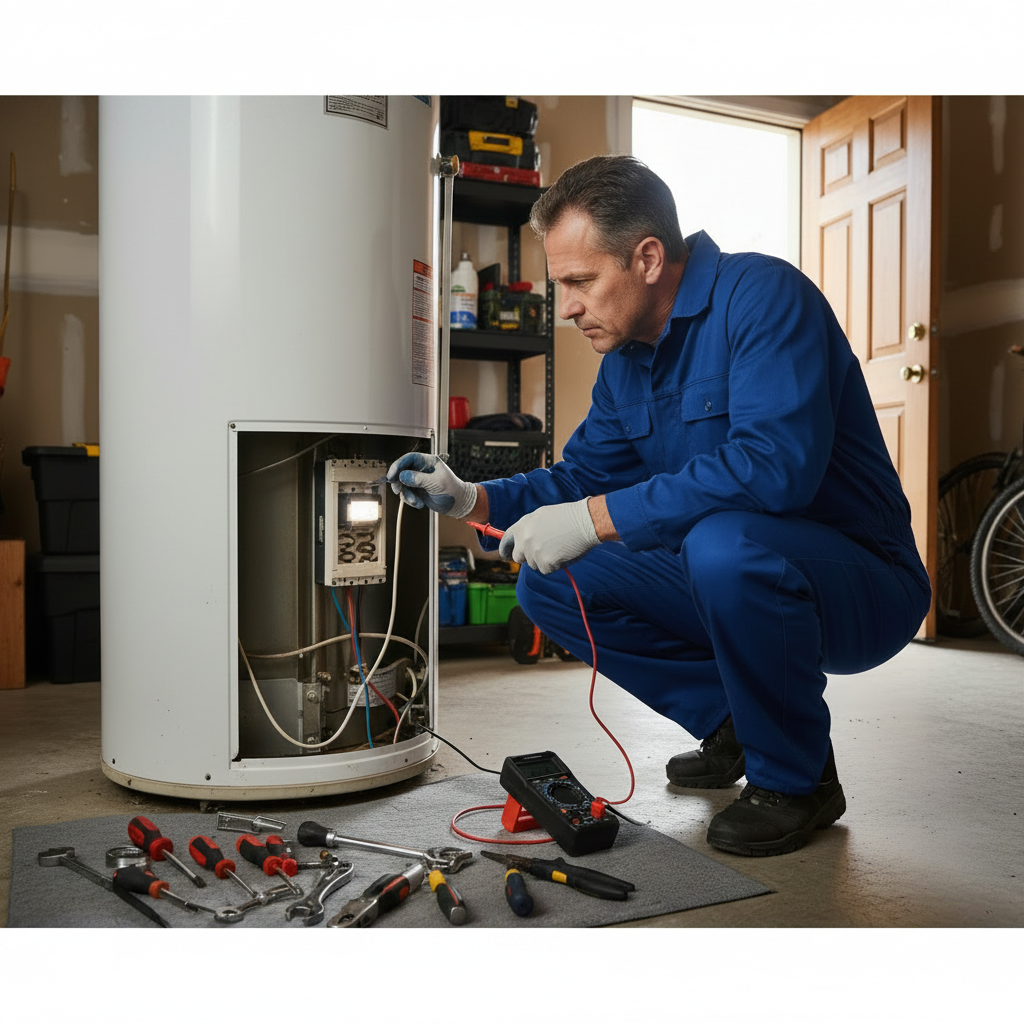
What We Diagnose and Fix
Water heaters fail in common ways. Here's what we see most often in McKinney homes — and what each one means.
No hot water at all
Electric units: upper heating element or tripped breaker. Gas units: pilot, thermocouple, or gas valve. Different problems, different fixes — starts with knowing which type you have.
Hot water runs out faster than it used to
Sediment builds up and blocks the heating element from doing its job. The unit still heats — it just can't keep up like it used to.
Pilot light won't stay lit
The thermocouple is the most common cause — it tells the gas valve the pilot is lit. When it fails, the valve shuts off. Replacing it is a clear, defined repair.
Popping or rumbling during the heating cycle
Sediment trapped under the element gets superheated. Sometimes fixable with a flush. Always a sign the unit is aging. Not an emergency — but worth knowing about.
Dripping from a valve or connection
T&P valve, drain valve, and inlet/outlet connections can all drip without meaning the tank is done. These are small part failures — usually fixable — and don't mean you need a new unit.
Water takes longer to reheat
Usually a failing lower element. The unit still heats eventually, but takes longer and longer. It's working harder to do less — and that only goes one way.
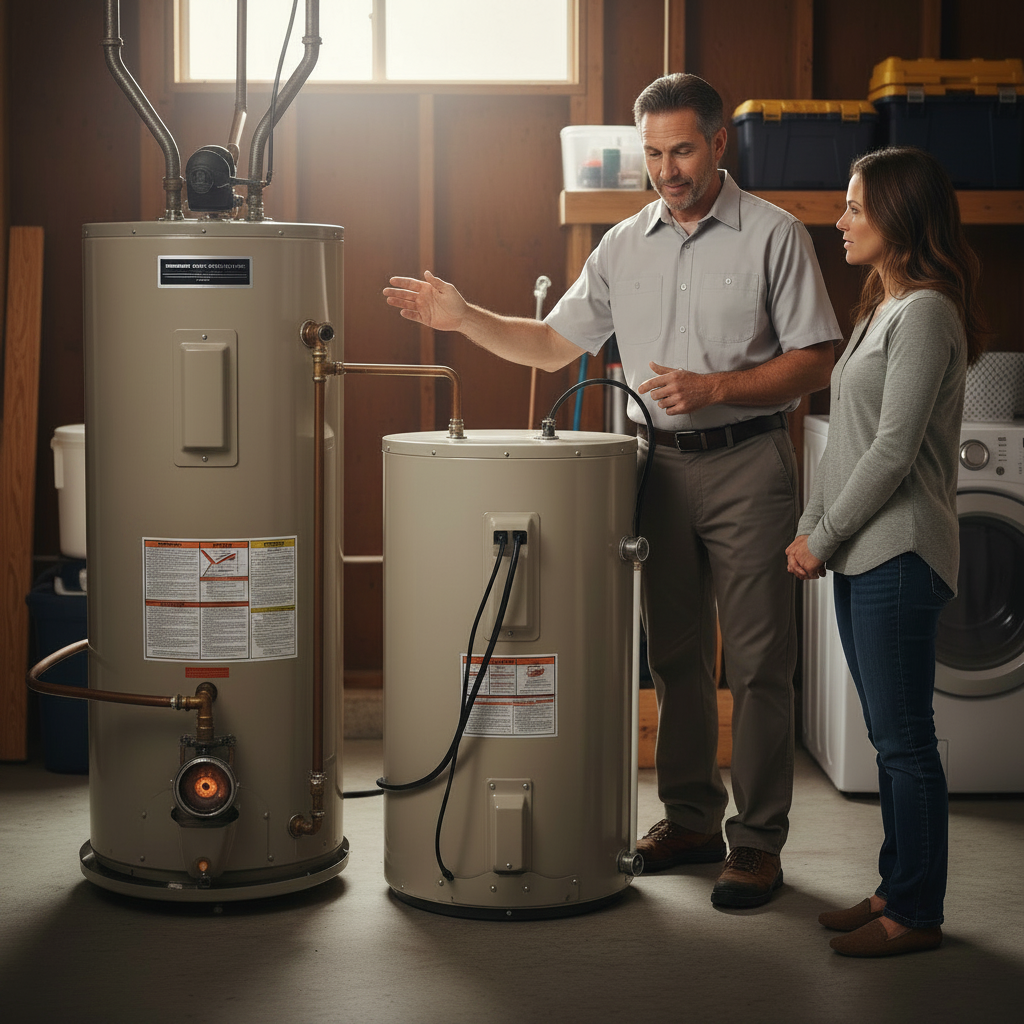
Gas vs. Electric
Different Systems, Different Failure Points
Gas and electric units break in different ways. Knowing which type you have is where diagnosis starts.
Gas units most often fail at the thermocouple, gas valve, or burner. Electric units fail at the upper or lower heating element — they behave differently, and no hot water at all usually points to the upper element or a tripped breaker.
- Gas: pilot assembly → thermocouple → gas valve → burner (in rough order of likelihood)
- Electric: upper element for complete loss, lower element for short supply / slow recovery
- Both: sediment scaling, pressure relief valve issues, connection leaks
- Both: performance decline from internal corrosion as the unit gets older
Repair or Replace — Here's the Honest Breakdown
Most decisions come down to age, repair cost, and how the unit is performing. Here's the breakdown.
Repair Makes Sense When…
- The unit is under 8–10 years old
- The problem is isolated (bad element, thermostat, valve)
- The tank body is not corroded
- Repair cost is clearly less than replacement value
- You have reasonable remaining lifespan left
Replacement Is Worth Considering When…
- The unit is 10–12+ years old
- This is the second or third repair in recent years
- The tank is rusting or corroding
- Hot water demand has grown beyond the unit's capacity
- Energy efficiency has noticeably declined
Call 24/7 or live chat. We'll give you a direct answer after we see the unit.

The Cost of Waiting
A Small Problem Now Is a Bigger Problem Later
A slow drip at the base can soak the floor before you notice it. A failing thermostat will eventually stop working — usually when you least expect it.
Diagnosing now means you choose your next step. Waiting means the unit chooses for you.
Understanding Water Heater Repair in McKinney, TX
What Water Heater Repair Actually Involves
Water heater repair is not a single service — it's a category that covers a wide range of failures, each with a different cause, a different fix, and a different cost. The word 'repair' gets used loosely, and that's part of why homeowners sometimes feel uncertain about what they're actually paying for and whether it's the right move.
A technician arriving to repair a water heater is really doing two things: diagnosing the specific component that failed, and evaluating whether that component is worth fixing given the overall condition and age of the unit. Those are separate steps, and an honest technician keeps them separate.
In McKinney, TX, water heater repair calls most commonly involve heating element failures in electric units, thermocouple and gas valve failures in gas units, sediment-related performance decline in tanks of all types, and pressure relief valve issues that become apparent when a homeowner notices dripping. Each of these has a different urgency, a different cost, and a different relationship to the long-term viability of the unit.
How Long Do Water Heaters Last in North Texas?
Most standard tank water heaters are designed for a service life of 8–12 years. In practice, many McKinney homeowners see units that run 10–15 years with proper maintenance and reasonable luck. Tankless units last longer — often 15–20 years — but require annual descaling to reach that lifespan in a hard water area like Collin County.
Hard water accelerates sediment buildup inside the tank and depletes the anode rod faster than it would in soft water markets. North Texas water is moderately hard, which means sediment management and anode rod replacement are not optional maintenance tasks — they're the reason some units last 14 years and others don't make it to 9.
The Real Cost of Water Heater Repair vs. Replacement
The general rule used by most industry professionals is the 50% rule: if the cost to repair the unit exceeds 50% of the cost of a comparable new unit, replacement is usually the financially smarter choice — especially on units more than 7 years old.
In practical terms, a thermocouple replacement on a 6-year-old gas unit is clearly worth doing. A gas valve replacement on a 12-year-old unit with visible corrosion, known sediment buildup, and a history of problems is a different conversation. The repair cost might be the same, but the risk profile of the older unit changes what that money actually buys you.
We tell homeowners the full picture — not just the repair cost in isolation, but what the repair means given the unit's age, condition, and history.
Water Heater Repair in McKinney — Common Scenarios
Most water heater repair calls in McKinney fall into a handful of predictable patterns. An electric unit stops producing hot water — usually a tripped breaker or upper element. A gas unit's pilot won't stay lit — almost always a thermocouple. A unit produces less hot water than it used to — usually sediment or a failing lower element. A fitting or valve is dripping — often repairable without touching the tank itself.
Each of these is a defined repair. What changes the equation is age, condition, and how the unit was maintained. A 4-year-old unit with any of these problems is a clear repair candidate. A 13-year-old unit with the same problem needs a more complete assessment before the recommendation is made.
- Thermocouple replacement: straightforward repair, highly effective when the pilot goes out
- Heating element replacement: common on electric units, upper and lower elements fail differently
- Sediment flush: improves performance, extends remaining life, won't save a tank that's already corroded
- T&P valve replacement: important safety component, worth replacing when it fails regardless of unit age
- Anode rod replacement: preventive maintenance that extends tank life significantly
- Gas valve replacement: typically warranted only on younger units — significant cost on a unit near end of life
Why McKinney Homeowners Should Prioritize Diagnosis
The single most important thing a water heater technician can do for a homeowner is give them accurate information. Not a sales pitch — information. What failed, what it costs to fix, what the repair buys them in terms of expected additional service life, and what the alternative looks like.
At McKinney Water Heater Repair, diagnosis comes first. We won't recommend a repair or a replacement until we've looked at the unit and run the appropriate tests. And we won't recommend replacement when repair is the right call — even if replacement generates more revenue.
McKinney Hard Water & How Response Works
How McKinney's Water Affects Your Water Heater — and How to Get Help Fast
McKinney's municipal water measures 120–180 parts per million of dissolved calcium and magnesium minerals — moderately hard by any standard. In homes across Stonebridge Ranch, Craig Ranch, and Adriatica Village, that hardness means sediment accumulates inside the tank faster than many homeowners expect, shortening heating element life and accelerating tank corrosion from the inside out.
When you call, our AI assistant answers in seconds — 24 hours a day, 7 days a week. It captures the key details: unit type, symptoms, how long it's been happening. A $47 call-out fee secures your guaranteed response, and a local licensed plumber handles the diagnostic visit and any repair work. We test the specific components, tell you what failed, and give you a clear cost — no guesswork, no upsell.
Neighborhood-Specific Water Heater Patterns in McKinney
In Trinity Falls and Tucker Hill — communities built in the 2000s and 2010s — original water heaters are now entering the 8–12 year window where component failures become common. In Historic Downtown McKinney, where housing stock is older and units have often been replaced, the failure patterns shift toward gas valve and thermocouple issues rather than tank corrosion. Each neighborhood has its own pattern, and understanding those patterns helps us come prepared with the right parts and the right approach.
Repair Questions
After You Reach Out
What Happens When You Call
- 1
You describe what you're seeing
Unit type, symptoms, how long it's been happening. This helps us come prepared.
- 2
We look at the unit and test what needs testing
We can't diagnose over the phone. We need to see it.
- 3
We tell you what's wrong and what it costs
Specific problem, specific fix, specific cost. No vague estimates.
- 4
We tell you whether repair or replacement makes more sense
If fixing it doesn't add up given the unit's age and condition, we'll say so — and explain why.
- 5
You decide — no pressure
The information is yours. We work at your pace.
Ready to get help?
Call for the fastest response — we're available 24/7. Send a message if it's not urgent — we'll follow up promptly.
Call 24/7 Now — +1 469 824 3854Mon–Fri: 7:00 AM – 7:00 PM · Sat: 8:00 AM – 5:00 PM
Request Water Heater Repair
Describe your situation and we'll follow up promptly during business hours. For urgent issues, call +1 469 824 3854 — it's faster.