Water actively pooling? Call 24/7 now or live chat — don't wait on this.
Call Now — +1 469 824 3854Leaking Water Heater · McKinney, TX
Leaking Water Heater in McKinney, TX
Not every leak means the tank is done — but every leak needs a same-day answer. We identify where the water is coming from, tell you whether repair is the right call, and get there fast. Call 24/7 now or live chat for immediate help.
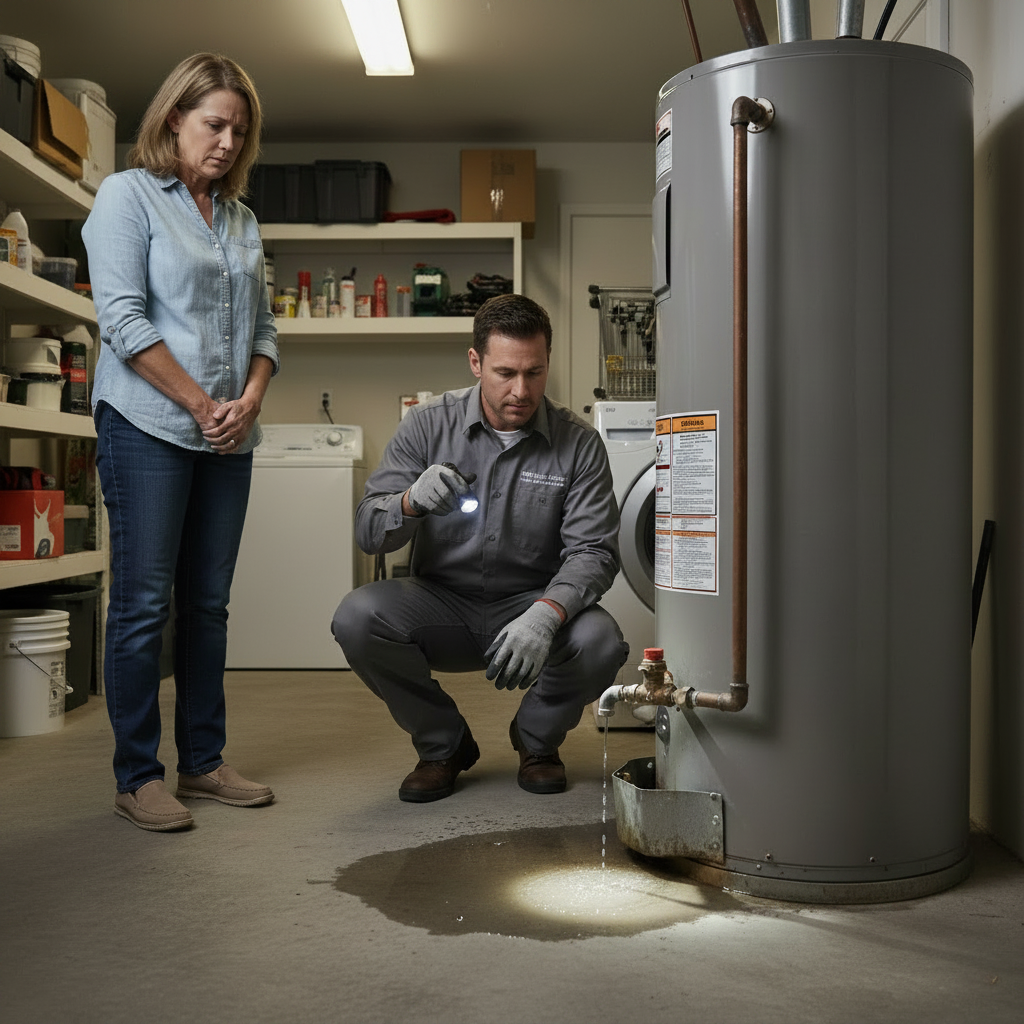
What to Do Right Now, Before We Arrive
These steps limit damage and give us better information when we get there. None of them require tools or opening the unit.
- 1
Locate the cold water shutoff on the supply line
It's on the cold water pipe going into the top of the unit — usually a handle or lever. If the leak is significant and you can operate it safely, closing it limits how much water can enter the tank while you wait.
- 2
Note exactly where the water is coming from
Top of the unit, a valve on the side, pooling at the base, or coming from the tank wall itself? The location narrows the diagnosis significantly before we arrive.
- 3
Don't move the unit or drain it yourself
Unless there's a specific reason to act immediately, leave the unit in place. Moving a leaking water heater without proper preparation usually makes the situation worse.
- 4
If you smell gas — stop and leave the house
Don't operate any light switches or appliances. Leave through a door you can open without creating a spark, and call your gas company from outside. Gas and water together near an appliance is a different situation.
- 5
Call — active pooling is same-day territory
A slow drip that's been there for a few days is still worth addressing today. Water damage accumulates quietly before it becomes visible.
Where Water Heater Leaks Actually Come From
Six common sources — and why the location matters more than the size of the drip.
Pressure Relief (T&P) Valve
The T&P valve is a safety device that opens when the tank overheats or pressure builds too high. A dripping T&P may be doing its job — or may have failed. Either way, it needs attention, and the cause matters.
Drain Valve at the Base
The drain valve sits near the bottom of the tank. It can develop a slow drip over time at the handle or seat. This is typically repairable without replacing the unit.
Inlet and Outlet Connections
The pipes entering and leaving the top of the tank can loosen or corrode at the fittings over time. Connection leaks are usually repairable — and are one of the most common misdiagnosed 'tank failures.'
Tank Body
A leak from the steel tank itself means internal corrosion has worked through the wall. This is the one source that is not repairable. If water is coming from the tank body — not a fitting, not a valve — the tank needs to come out.
Anode Rod Port
If the anode rod was previously removed and the threaded port wasn't resealed correctly, it can develop a slow drip. Identifiable and solvable — but easy to miss without knowing to check.
Condensation
New units or units in humid spaces sometimes develop surface condensation that looks like a leak. The source needs to be confirmed before treating it as a component failure.
Repairable Leak or Failing Tank?
Most decisions come down to age, repair cost, and how the unit is performing. Here's the breakdown.
The Leak Is Likely Repairable When…
- Water is coming from a valve, fitting, or connection — not the tank body
- The tank shows no visible rust or external corrosion
- The unit is under 10 years old and was performing well before the leak
- The T&P valve is discharging but the tank itself is sound
- The drain valve has a minor drip at the handle or seat
Replacement Is Likely Needed When…
- Water is coming directly from the tank body — not a valve or fitting
- There's visible rust, pitting, or corrosion on the exterior tank surface
- The unit is 10+ years old with an unknown or poor service history
- There have been multiple previous leaks or repairs on the same unit
- Internal corrosion is confirmed during inspection

Why Slow Leaks Are Deceptive
Water Damage Builds Before You Can See It
In most McKinney homes, the water heater sits in a garage, utility closet, or utility room — spaces where moisture soaks into flooring, drywall, and insulation without showing up for days or weeks.
A slow drip over a month can warp subfloor, promote mold behind a wall, or rust-stain a slab. It won't stop on its own.
That's why professional water heater leak repair starts with identifying the source — not assuming the worst — so a $15 valve drip isn't mistaken for a tank that needs replacing.
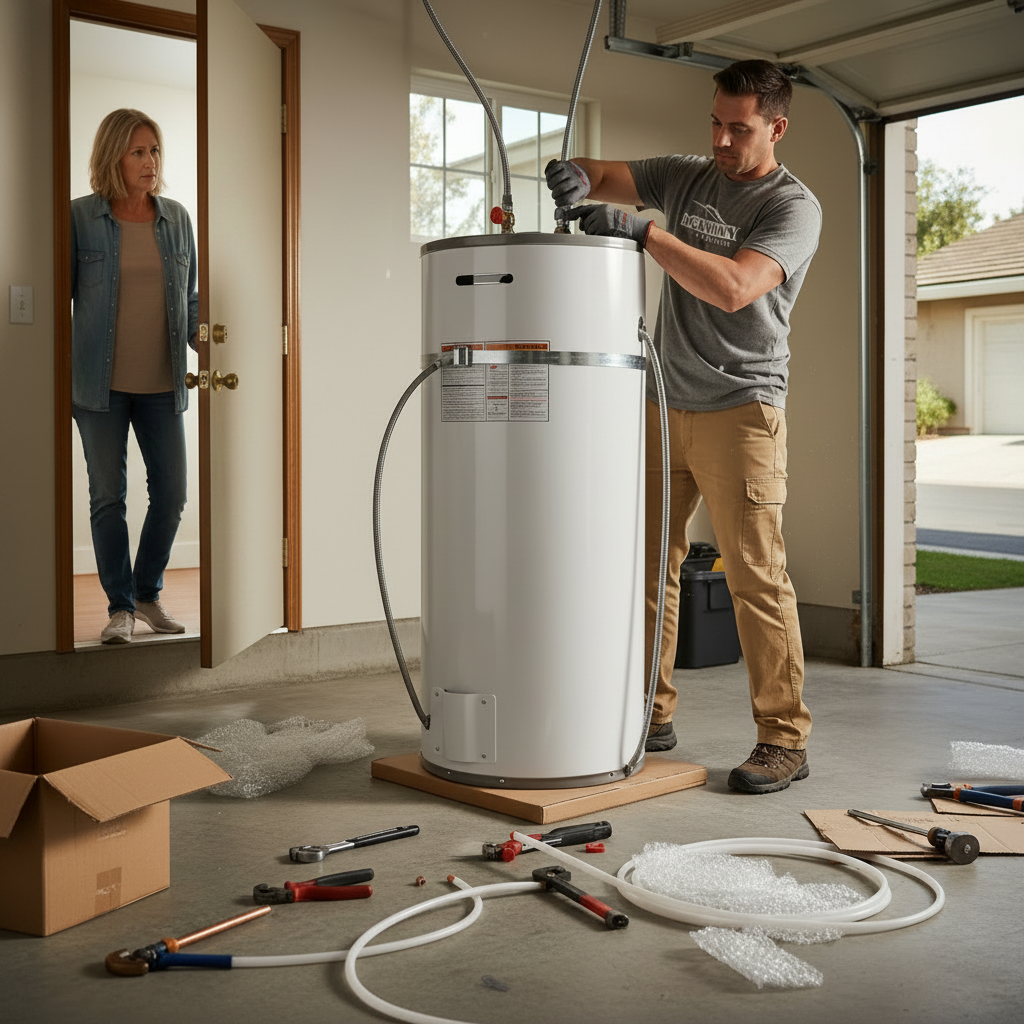
When the Tank Body Has Failed
Tank Body Leaks Can't Be Patched
When corrosion works through the tank wall, the water is coming from inside the steel itself. There is no patch for this. The tank has to go.
A replacement gives you a clean start — the right size unit, a new warranty, and no more guessing when the next failure is coming.
Leaking Water Heater — Complete Guide for McKinney Homeowners
Understanding Water Heater Leaks: What They Mean and What to Do
A leaking water heater is one of the most common urgent calls we receive in McKinney. And one of the most common misconceptions is that any leak means the tank is done and needs to be replaced immediately. That's not always true — and an honest diagnosis can save a homeowner hundreds or thousands of dollars.
The source of the leak determines everything. A leak from a valve or fitting is an entirely different situation from a leak from the tank body itself. The former is often repairable in under an hour. The latter requires replacement. Without correctly identifying the source, any recommendation is just a guess.
Why Water Heater Leaks Should Always Be Treated as Same-Day
Even a slow drip deserves same-day attention — not because every drip is an emergency, but because water damage is cumulative and disproportionate to the visible leak. In McKinney homes where the water heater sits in a garage, closet, or utility room, moisture soaks into flooring, drywall, and insulation before it becomes visible. By the time you see water damage, it's already significant.
A slow drip over a week can warp a plywood subfloor. Over a month, it can create conditions for mold growth behind drywall. Over several months, it can cause structural damage to floor framing. None of this is visible at the drip stage — which is exactly why small leaks shouldn't wait.
The Pressure Relief (T&P) Valve — What It Does and Why It Leaks
The temperature and pressure relief valve is one of the most important safety components on a water heater. It's designed to open and release water if the tank overheats or pressure builds beyond safe levels. When it works correctly, it protects the tank — and the home — from a dangerous overpressure event.
A T&P valve that drips can mean two different things. It may be doing its job — the tank temperature or pressure is higher than it should be, and the valve is relieving it. Or the valve itself may have failed and is no longer sealing correctly. Either situation requires professional attention. A T&P valve that's relieving regularly is telling you something about the tank's operating conditions — that needs to be investigated, not just the valve replaced.
The Drain Valve — A Common Source of Misdiagnosed 'Tank Failures'
The drain valve at the base of the tank is one of the most common sources of pooling water at the bottom of a water heater — and one of the most commonly misidentified. Many homeowners see water at the base of their unit and assume the tank is leaking. Before drawing that conclusion, the drain valve should be inspected first.
Drain valves are plastic components that develop slow drips at the handle or seat over time. This is a repairable component that can be replaced without replacing the unit — usually in under an hour. We check the drain valve before assuming any bottom-of-tank moisture is a tank body failure.
When a Tank Body Leak Means Replacement
A leak from the steel tank body itself is the one situation that is not repairable. When corrosion works through the tank wall, water comes from inside the steel. There is no patch material that holds reliably under the pressure and temperature cycling of a water heater. The tank has to be replaced.
The indicators of a tank body leak: water coming from the side or base of the tank that is not traceable to a valve, fitting, or the drain valve port. Visible rust or pitting on the exterior tank surface near the moisture. Discolored or rust-tinged water from the hot side only — indicating the interior of the tank has corroded significantly.
When a tank body leak is confirmed, the practical next step is replacement — with the right size, the right type, and proper permitting through McKinney Development Services.
Leaking Water Heater and Homeowner's Insurance
Whether a leaking water heater is covered by homeowner's insurance depends on the nature of the event. Sudden, accidental water damage from a burst tank or failed component is often covered. Gradual leakage that was not addressed in a timely way is typically not covered — insurers can argue the homeowner should have noticed and acted.
This is another reason why same-day response to any water heater leak is the right approach — not just for the physical damage it prevents, but for maintaining coverage eligibility.
McKinney Hard Water & How Response Works
How McKinney's Water Causes Leaks — and How to Get Help Fast
McKinney's water measures 120–180 ppm of dissolved minerals — and those minerals are what eventually eat through the tank wall. In homes across Adriatica Village and Trinity Falls, sediment builds at the bottom of the tank, traps heat against the steel floor, and accelerates corrosion until the wall thins enough to leak. This is the most common path to a tank body leak in McKinney.
When you call about a leak, our AI assistant answers in seconds — 24/7. It captures the critical details: where the water is, how much, and how long. A $47 call-out fee secures your guaranteed response, and a local licensed plumber identifies the leak source — valve, fitting, or tank body — before recommending anything. We don't assume the worst, and we don't recommend replacement when repair is the right call.
Water Heater Leak Repair Patterns in McKinney Neighborhoods
In Historic Downtown McKinney, where some homes have older plumbing and aging units, connection leaks and drain valve failures are more common than tank body leaks. In newer communities like Stonebridge Ranch, tank body leaks from hard-water-accelerated corrosion are the more typical pattern. The neighborhood tells us something about what to expect — but we always test before concluding.
Leaking Water Heater Questions
After You Reach Out
What Happens When You Call
- 1
You call and describe what you're seeing
Where the water is, how much, how long it's been happening. This helps us understand urgency and what to bring.
- 2
We identify the source
Valve, connection, fitting, or tank body. The source is what determines whether this is a repair or a replacement situation.
- 3
We tell you what we found and what it means
If it's repairable, we tell you that and what it costs. If the tank body has failed, we explain your replacement options clearly.
- 4
You decide how to proceed
No pressure. You have the diagnosis and the options. The decision is yours.
Ready to get help?
Call for the fastest response — we're available 24/7. Send a message if it's not urgent — we'll follow up promptly.
Call 24/7 Now — +1 469 824 3854Mon–Fri: 7:00 AM – 7:00 PM · Sat: 8:00 AM – 5:00 PM
Request Leaking Water Heater Service
Describe your situation and we'll follow up promptly during business hours. For urgent issues, call +1 469 824 3854 — it's faster.