Water Heater Replacement · McKinney, TX
Water Heater Replacement in McKinney, TX
Tank or tankless — we check that replacement is actually needed before recommending it. We help you pick the right unit and walk you through the McKinney permit steps. Call 24/7 or live chat now.

The Replacement Decision
Repair Is Usually the Right Call. Until It Isn't.
If repair is the better call, we say so. For a unit under 10 years old with one clear problem, fixing it usually saves money.
The math shifts when the unit is old, has needed multiple repairs, or when the tank body itself is leaking. At that point, putting more money into it doesn't make sense.
Signs Replacement Is Probably the Right Call
These are the situations where replacement is typically the more sensible recommendation. Not a checklist — these are the patterns that change the math.
10–12+ years old and actively symptomatic
Most tank water heaters are designed for 8–12 years of reliable service. A unit at the high end of that range with an active problem is a replacement candidate — not a repair candidate. Fixing the current failure doesn't change the age of everything else.
Second or third repair in recent years
One repair on an aging unit is normal. Repeated repairs on the same unit usually means the system as a whole is declining. You're funding the end of the unit's life one repair at a time.
Visible rust or corrosion on the tank exterior
Surface rust near fittings or at the base often reflects internal degradation. Once the tank wall is compromised from the inside, there's no repair path — the corrosion isn't stopping.
Hot water is discolored or smells metallic
Rust-colored or metallic-smelling water from the hot side only is a strong signal that the anode rod is exhausted and the tank interior has degraded. The anode rod exists to sacrifice itself so the tank doesn't corrode — when it's gone, the tank corrodes instead.
The tank body itself is leaking
A crack or pinhole in the steel tank wall cannot be patched. If water is coming from the tank body — not a valve, not a fitting, but the tank itself — replacement is the only resolution.
Performance has declined noticeably over the past year
Sediment and worn parts reduce how much hot water the unit can deliver. If it was keeping up 18 months ago and isn't now, that's the unit telling you where it's headed.

Tank vs. Tankless
Two Different Systems. Here's How to Actually Choose.
Tank or tankless? It comes down to your hot water use, what your home already has in place, and your budget.
A tank unit costs less upfront, is simpler to install, and works well for most McKinney homes. Tankless delivers hot water on demand — more efficient long-term, smaller footprint — but costs more upfront and may require gas line or electrical upgrades.
- Tank: lower upfront cost, straightforward installation, proven reliability for most homes
- Tankless: continuous hot water, higher efficiency over time, smaller footprint
- Tankless upgrade may require gas line upsizing or electrical panel work — worth knowing before deciding
- Right sizing matters for both — undersized means you run out, oversized wastes energy and money
What the Replacement Process Actually Looks Like
We assess your current unit honestly
Before recommending anything, we look at what you have — age, condition, configuration — and confirm replacement is actually the right call. We don't assume it.
We explain your options with real trade-offs
Tank or tankless, gas or electric, size — we'll explain what each option means for your specific home setup, what an upgrade would involve, and whether it makes practical sense for you.
We explain the McKinney permit process
Most replacements need a permit through McKinney Development Services. We walk you through the steps so there are no surprises.
Old unit out, new unit in
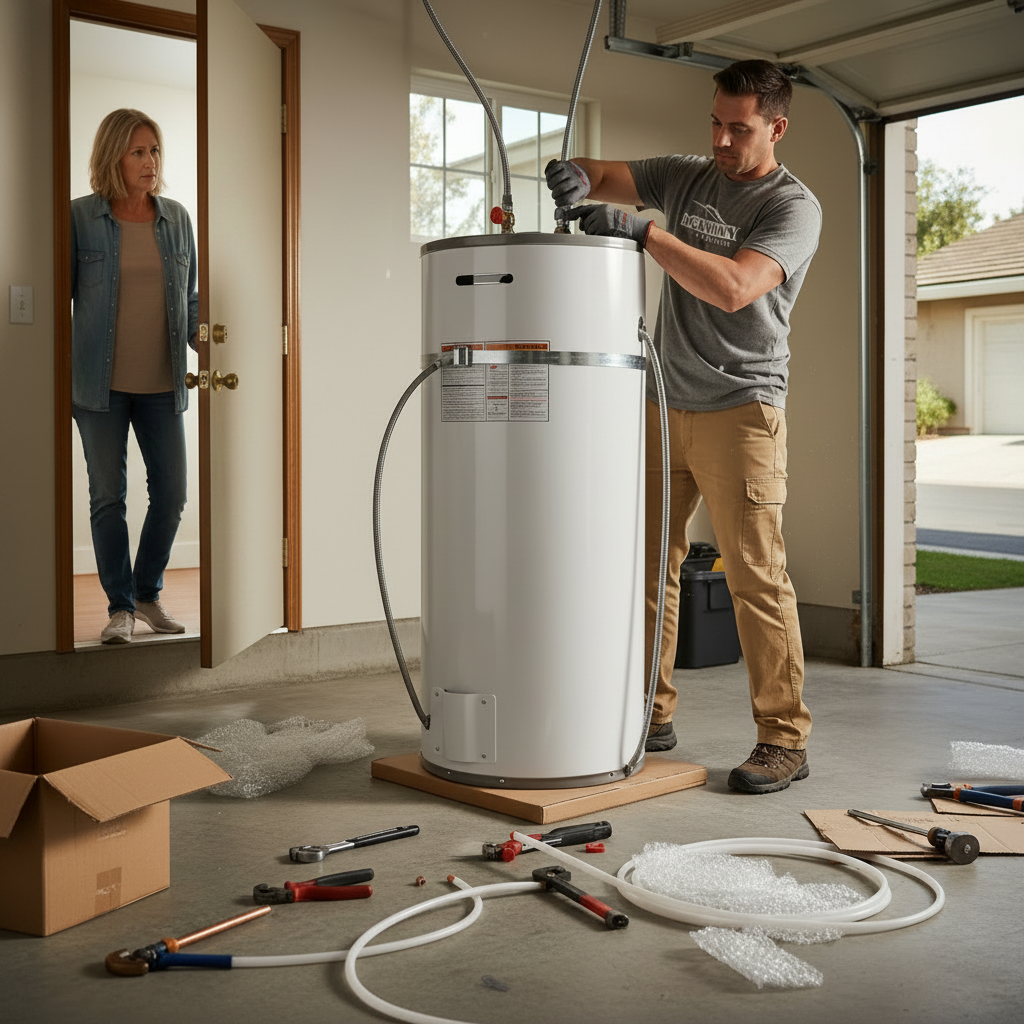
The existing unit is drained, disconnected, and removed. The new unit goes in, connections are made, and everything is tested before we leave.
We walk you through what you now have
Where the shutoff valve is, how the unit works, what the warranty covers. We answer questions before we leave.
After Installation
What Changes When You Have a Properly-Sized New Unit
More hot water. Faster recovery. Lower energy use compared to an old unit full of sediment and worn-out parts.
An old unit working too hard shows up on your energy bill every month. A new unit resets that — and comes with a warranty.
- More available hot water — sized for your actual household usage
- Better energy efficiency than a degraded aging unit
- Reliable hot water — no more wondering when the next problem is coming
- Much lower risk of sudden failure and the water damage that comes with it
Water Heater Replacement in McKinney, TX — Complete Guide
What Homeowners Need to Know Before Replacing a Water Heater
Water heater replacement is one of the most consequential home maintenance decisions a McKinney homeowner will make. Get it right and you have reliable hot water, lower energy costs, and a proper permit record. Get it wrong — wrong size, wrong type, or no permit — and you're dealing with cold showers, a failed inspection, or a surprise during your home sale.
This page covers everything you need to make a good decision: when replacement is the right call, how to choose between tank and tankless, what the permit process looks like in McKinney, and what to expect during installation.
When Is Water Heater Replacement the Right Call?
Replacement is the right call when repair no longer makes financial sense — or when the tank body itself has failed. The most common indicators are age (10+ years for a standard tank), repeated failures, visible corrosion on the exterior, rust-colored hot water, or a leak originating from the tank wall.
The decision isn't always obvious. A 9-year-old unit with one small failure might have 4–5 good years left. A 7-year-old unit with recurring issues, sediment damage, and a history of ignored maintenance might be a better replacement candidate than its age suggests. Real diagnosis matters more than a fixed age cutoff.
Tank vs. Tankless Water Heaters — Which Is Right for Your McKinney Home?
The tank vs. tankless decision is one of the most common questions we get in McKinney. The short answer: tank units are right for most homes, and tankless is right when specific conditions are met. Here's how to think through it.
Tank water heaters store a set volume of hot water — typically 40 to 80 gallons for residential units — and keep it warm continuously. They cost less upfront, are simpler to install, and have lower maintenance requirements in the short term. The drawback: if your household runs through the tank, you're waiting for it to recover. Recovery time for a 50-gallon electric unit is roughly 60–80 minutes.
Tankless units heat water on demand — there's no tank to run out of. For households that use a lot of hot water simultaneously (multiple showers running, dishwasher, laundry), tankless eliminates that constraint entirely. They also use less energy because they're not maintaining a hot standby volume all day. The tradeoffs: higher upfront cost, and they may require gas line upsizing or electrical upgrades depending on your home's current setup.
- Household of 1–3 people with normal usage: 40–50 gallon tank is typically sufficient
- Household of 4–5+ people or high simultaneous demand: 75-gallon tank or properly sized tankless
- Tankless upgrade: expect a higher installation cost and possible utility work
- Gas tankless: requires adequate BTU supply to the unit — may need gas line work
- Electric tankless: requires significant electrical capacity — often 240V, high amperage
Water Heater Sizing — Why It Matters More Than People Realize
An undersized water heater is one of the most common installation mistakes in residential construction and replacement. It means you run out of hot water during normal household activity — not because the unit is failing, but because it was never big enough for your household's demand.
For tank units, sizing is based on the first-hour rating (FHR) — how much hot water the unit can deliver in the first hour of use. For tankless units, it's gallons per minute (GPM) at a specific temperature rise. A technician who doesn't ask about your household size and usage patterns before recommending a unit isn't giving you a real recommendation.
The McKinney Water Heater Replacement Process
A straightforward tank-for-tank replacement in McKinney takes 2–4 hours under normal conditions. The process starts with shutting off the water supply and energy source, draining the existing tank, disconnecting and removing it, and installing the new unit with proper connections.
Before the new unit is functional, the water supply is restored, the unit is filled, and everything is tested — temperature output, pressure relief valve function, gas or electrical connections. We don't leave until we've confirmed the unit is working correctly and the homeowner knows where the shutoff valve is.
For tankless conversions or larger upgrades, additional work may be involved — venting, gas line work, or electrical panel upgrades. This is assessed before any commitment is made.
McKinney Hard Water & How Response Works
How McKinney's Water Drives Replacement — and How to Get Help Fast
McKinney's municipal water measures 120–180 ppm of dissolved minerals. In established communities like Stonebridge Ranch and Craig Ranch, where many homes are now 15–20 years old, original water heaters are reaching or past replacement age. The hard-water sediment that accumulated over those years means the tanks in these neighborhoods are failing faster than the manufacturer's lifespan rating would suggest.
When you call about replacement, our AI assistant answers in seconds — 24/7. It captures the details: your current unit type, age, and what's happening. A $47 call-out fee secures your guaranteed response, and a local licensed plumber handles the assessment and installation. We confirm replacement is actually needed before recommending it — and we handle the McKinney permit as part of the job.
Replacement Patterns Across McKinney Neighborhoods
In Eldorado and Tucker Hill, where homes were built in the 2000s and early 2010s, original water heaters are entering the 10–12 year replacement window. In Historic Downtown McKinney, where housing stock is older, most units have already been replaced at least once — the conversation is about the second or third cycle, and hard water effects compound with each generation of tank.
Replacement Questions
After You Reach Out
What Happens When You Call
- 1
You describe the situation
Age, symptoms, what a previous tech may have said. We understand the picture before we arrive.
- 2
We confirm replacement is actually needed
We don't assume it before seeing the unit. We verify first.
- 3
We walk through your options
Tank, tankless, size. You understand the trade-offs before anything is decided.
- 4
We explain the McKinney permit requirement
Most replacements need a permit. We walk you through what that looks like.
- 5
Install, test, and walkthrough
Old unit out, new unit in and tested. You know where the shutoff is and what the warranty covers before we leave.
Ready to get help?
Call for the fastest response — we're available 24/7. Send a message if it's not urgent — we'll follow up promptly.
Call 24/7 Now — +1 469 824 3854Mon–Fri: 7:00 AM – 7:00 PM · Sat: 8:00 AM – 5:00 PM
Request Water Heater Replacement
Describe your situation and we'll follow up promptly during business hours. For urgent issues, call +1 469 824 3854 — it's faster.