Water Heater Replacement · Frisco, TX
Water Heater Replacement in Frisco, TX
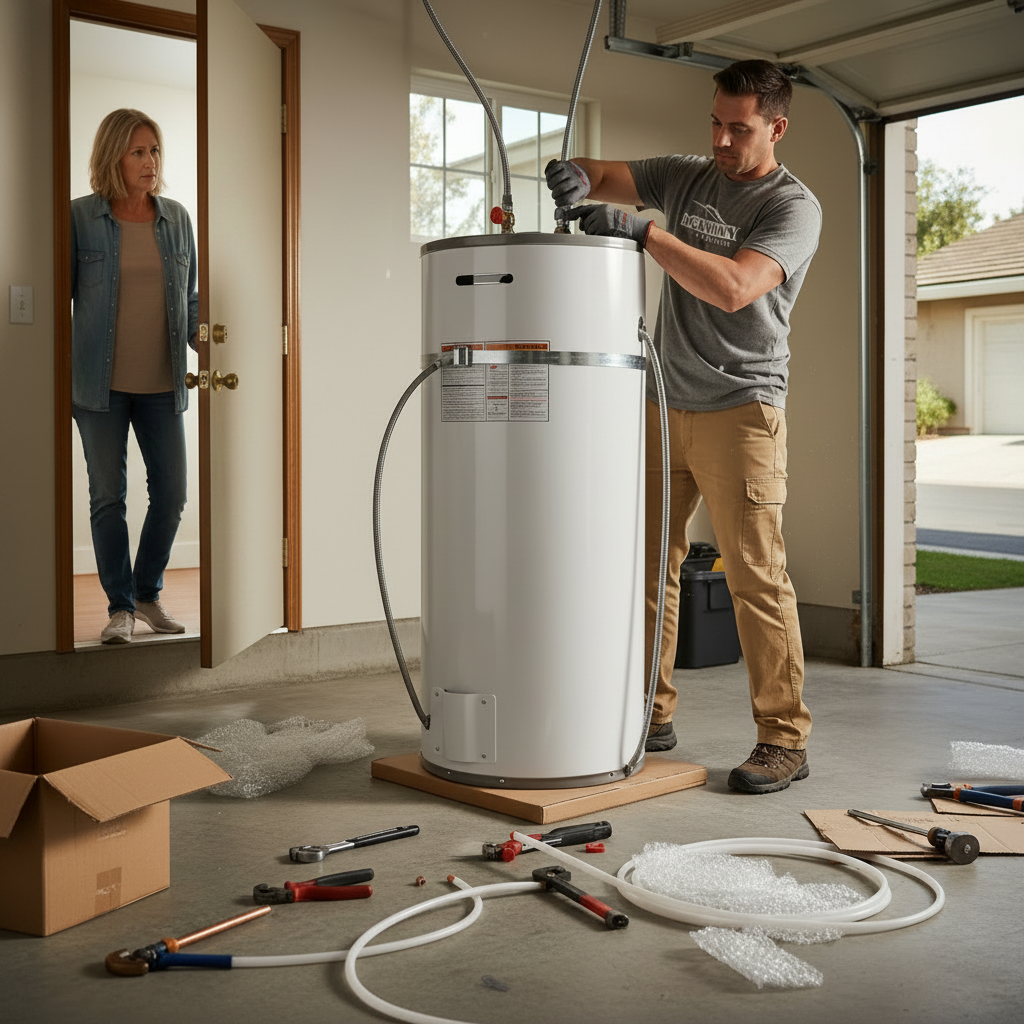
Water heater replacement in Frisco, TX looks different than in the older nearby cities. Frisco has a population of approximately 245,000 and a median age of 38.3, with a median household income around $150,000. It is one of the fastest-growing cities in the US, with population up roughly 450% since 2000 — meaning a high share of Frisco homes are newer construction relative to the other nearby cities. That matters for replacement: fewer units here are old enough to need replacement purely due to age, but when replacement is needed, tankless is a strong consideration given the newer construction and higher household income in this market. We confirm replacement is actually needed before recommending it — and we help you choose the right tank or tankless system for your home. Call 24/7 or live chat now.

The Replacement Decision
When Replacement Is the Smarter Path Forward
For a unit under a decade old with a single isolated failure, repairing the failed component is usually the better financial decision — and we'll tell you that directly. In Frisco, where a high share of homes are newer construction, many units simply haven't been in service long enough to warrant replacement on age alone.
But the calculus shifts when the unit is aging, has required repeated service calls, or when the tank body itself has started leaking. At that point, continued repairs are just postponing an inevitable replacement. We evaluate each situation on its own merits rather than applying a blanket rule — and because Frisco's newer housing stock often has the infrastructure to support tankless, we present that option honestly alongside traditional tank replacement.
Repair or Replace — Which Makes Sense for Your Unit?
Most decisions come down to age, repair cost, and how the unit is performing. Here's the breakdown.
Repair Makes Sense When…
- The unit is under 8–10 years old
- The failure is isolated to one component
- The tank body shows no corrosion
- Repair cost is clearly less than replacement value
- The unit still has reasonable remaining service life
Replacement Is Worth Considering When…
- The unit is 10–12+ years old
- This is the second or third repair recently
- The tank is rusting or corroding
- Household demand has outgrown the unit's capacity
- Energy efficiency has noticeably declined
We give you a specific answer based on your actual unit — not a generic rule.
Signs Replacement Is Likely the Right Call
These are the patterns that typically change the repair-vs-replace math. Not a rigid checklist — these are the situations where replacement usually makes more financial sense than another repair.
Unit is 10+ years old with an active failure
Standard tank water heaters generally serve 8–12 years before components begin cascading. When a unit in that range develops a problem, fixing one part doesn't reset the age of the tank, valves, and connections — they're all aging together.
Repeated repairs within a short window
A single fix on an aging unit is normal. But when the same unit needs repeated service calls within a year or two, the entire system is in decline — each repair is buying months, not years.
Corrosion visible on the tank exterior
Rust staining near fittings or along the base usually reflects internal tank degradation. Once the steel wall starts corroding from inside, no external fix can arrest it.
Discolored or metallic-tasting hot water
Brownish hot water — when the cold side runs clear — signals the anode rod has been fully consumed and the tank lining is corroding. The anode rod exists to sacrifice itself; once it's depleted, the tank takes the damage.
Water leaking from the tank body
Moisture emerging from the steel shell itself — not a valve or fitting — means the tank wall has breached. No patch or sealant can restore a compromised tank; replacement is the only safe option.
Noticeable drop-off in performance
If the unit used to keep up with household demand but now falls short, sediment accumulation and worn components are typically why. Recovery times stretch and available hot water shrinks as the unit ages.

Tank vs. Tankless
Choosing the Right Replacement System for Your Frisco Home
The tank-versus-tankless decision comes down to three factors: how your household uses hot water, what infrastructure is already in your home, and what your budget allows. In Frisco, where newer construction means homes are more likely to have the gas supply or electrical capacity that tankless requires, the tankless conversation comes up more often here than in some neighboring cities.
Traditional tank units carry a lower upfront cost, install straightforwardly, and reliably serve most households. They store a fixed volume — typically 40 to 80 gallons — and maintain it at temperature continuously. Tankless systems heat water on demand, offering continuous supply and better long-term efficiency in a compact footprint, but they cost more upfront and may require gas line or electrical panel upgrades to support the unit. For Frisco homeowners with newer infrastructure and higher household incomes, the long-term efficiency and continuous hot water benefits of tankless often make the higher upfront cost a worthwhile investment — but we present both options honestly and let you decide.
- Tank: lower upfront cost, proven reliability, simpler installation
- Tankless: endless hot water, higher efficiency over time, compact footprint
- Frisco's newer construction often supports tankless without major utility upgrades
- Tankless may still require gas line upsizing or electrical panel work — worth knowing before deciding
- Proper sizing matters for both — undersized means running out, oversized wastes energy
Frisco, TX — Local Context
Water Heater Replacement in Frisco, TX
Frisco is one of the fastest-growing cities in the US, with a population of approximately 245,000 — up roughly 450% since 2000. The median age is 38.3 and the median household income is around $150,000. That growth trajectory means a high share of Frisco homes are newer construction relative to the other nearby cities, which directly shapes how water heater replacement works here.
Because the housing stock is newer, fewer Frisco units are old enough to need replacement purely due to age — but units still fail for other reasons: manufacturing defects, sediment accumulation from hard water, component failures, or tank body leaks. When replacement is needed, the newer construction and higher household income in this market make tankless a particularly strong consideration. Newer homes are more likely to have the gas supply or electrical capacity to support a tankless unit without major upgrades, and the long-term efficiency and continuous hot water benefits align with the investment-oriented mindset common in higher-income households.
Why Frisco's Newer Housing Stock Matters
In older nearby cities, replacement conversations often start from the assumption that the unit has simply reached the end of its service life. In Frisco, that's less common — many units here were installed during the rapid construction boom and haven't yet reached the 10–12 year window where age-driven replacement becomes typical. When a Frisco unit does need replacement, it's often due to a specific failure rather than systemic aging.
That changes the conversation. We don't lead with replacement by default — we inspect the actual unit, confirm there's no viable repair path, and then present your options. And because Frisco's newer construction often supports tankless infrastructure, we present that option alongside traditional tank replacement rather than defaulting to a like-for-like swap.
Sizing a Replacement for Your Household
One of the most common replacement mistakes is installing a unit that's the wrong size for the household. An undersized water heater means running out of hot water during normal use — not because the unit is failing, but because it was never matched to demand. Tank units are sized by first-hour rating; tankless by gallons per minute at a specific temperature rise.
We ask about your household size, how many fixtures run simultaneously, and whether you're keeping the same fuel type or switching configurations. The right size depends on real usage patterns, not a one-size-fits-all assumption.
Water Heater Replacement in Frisco, TX — Complete Guide
What to Know Before Replacing Your Water Heater
Replacing a water heater is a significant home infrastructure decision. Done correctly, it means reliable hot water, improved efficiency, and a clean compliance record. Done poorly — wrong size, wrong type, or skipped permits — it leads to cold showers, inspection complications, or issues when selling the home.
This guide covers the key decisions: recognizing when replacement is warranted, choosing between tank and tankless, understanding proper sizing, and knowing what to expect during installation.
Recognizing When Replacement Is the Right Decision
Replacement becomes the right call when repair no longer makes financial sense — or when the tank body itself has failed. The clearest indicators are advanced age (typically 10+ years for a standard tank), repeated failures within a short period, visible exterior corrosion, rust-tinged hot water, or a leak originating from the tank wall.
The decision isn't always obvious. A 9-year-old unit with its first isolated failure may still have several productive years ahead. A 7-year-old unit with a history of neglected maintenance, sediment accumulation, and repeated component failures may be a stronger replacement candidate than its age alone suggests. An in-person assessment matters more than any fixed age threshold.
Tank vs. Tankless — Making the Right Choice for Frisco Homes
The tank-versus-tankless decision depends on household usage patterns, existing home infrastructure, and budget. Tank water heaters store a fixed volume — typically 40 to 80 gallons for residential units — and maintain it at temperature continuously. They have a lower upfront cost, simpler installation, and serve most households well. The trade-off: if demand exceeds stored volume, you wait for recovery.
Tankless units heat water as it flows through the heat exchanger, meaning there's no stored volume to deplete. For households with high simultaneous demand, tankless eliminates the recovery wait. They're also more energy-efficient because they're not maintaining a hot standby volume. Considerations include higher upfront cost and the possibility that the home's gas supply or electrical panel may need upgrading. In Frisco, where newer construction often means the infrastructure is already in place to support tankless, the upgrade path is frequently smoother here than in older neighboring cities.
- 1–3 person household with average usage: a 40–50 gallon tank is typically sufficient
- 4+ person household or high simultaneous demand: consider a 75-gallon tank or properly sized tankless
- Tankless conversion: expect higher installation cost and potential utility upgrades
- Gas tankless: verify the home's gas line can supply the unit's BTU requirements
- Electric tankless: confirm the electrical panel has sufficient capacity — typically 240V at high amperage
Why Proper Sizing Matters
Incorrect sizing is one of the most frequent replacement mistakes. An undersized unit — tank or tankless — means running out of hot water during normal household use, not because the unit is failing but because it was never matched to the home's demand.
Tank units are sized by first-hour rating (FHR): the volume of hot water the unit can deliver in the first hour of use. Tankless units are sized by gallons per minute (GPM) at a specific temperature rise. A proper recommendation starts with understanding how many people live in the home, how many fixtures run simultaneously, and whether the fuel type is staying the same or changing.
What Happens During Installation
A standard tank-for-tank replacement typically takes 2–4 hours under normal conditions. The process begins with shutting off the water supply and energy source, draining the existing tank, disconnecting and removing it, and positioning the new unit with proper connections to water, fuel, and venting.
Before the installation is considered complete, the water supply is restored, the tank is filled, and the entire system is tested — temperature output, pressure relief valve function, and all gas or electrical connections. We don't leave until the unit is confirmed working and the homeowner knows where the shutoff valve is and how the system operates.
For tankless conversions or fuel-type changes, additional work may be required — venting modifications, gas line upgrades, or electrical panel work. These factors are assessed and discussed before any commitment is made.
Permit Considerations
Permit requirements for water heater replacement vary by municipality. Before installation, we recommend contacting the City of Frisco's building department directly to confirm current permit requirements for your specific project.
A properly permitted installation matters for several reasons: it ensures the work meets current code, it creates a documented record that can be important during a home sale, and it may be relevant to insurance coverage. We help you understand what may be required and recommend verifying before work begins.
What the Replacement Process Actually Looks Like
We inspect your current unit firsthand
Before recommending anything, we examine the unit in person — its age, condition, fuel type, and installation setup — and verify that replacement is genuinely the right call rather than assuming it.
We walk through your replacement options
Tank versus tankless, gas versus electric, and appropriate capacity — we explain what each direction means for your home's existing infrastructure and what a fuel-type change would entail, so you can decide with full context.
We address permit considerations
Permit requirements vary by municipality. We help you understand what may apply to your project and recommend confirming current requirements with the City of Frisco's building department before work begins.
Old unit removed, new unit installed
The existing unit is drained, safely disconnected, and hauled away. The replacement is positioned and connected to water, fuel, and venting — then fully tested for temperature output, pressure relief, and connection integrity.
We orient you to your new system
Shutoff valve location, basic operation, warranty details, and what to watch for going forward — we make sure you understand the new unit before we leave.
After Installation
What Changes With a Properly Sized New Unit
Greater hot water capacity, faster recovery times, and reduced energy consumption compared to a degrading unit burdened with sediment and aging components.
A failing water heater works harder to deliver less — and that inefficiency shows up on your monthly utility bill. A properly sized replacement corrects that and brings the security of a manufacturer's warranty.
- More available hot water — matched to your actual household usage
- Better energy efficiency than a degraded aging unit
- Reliable hot water — no more wondering when the next failure is coming
- Lower risk of sudden tank failure and the water damage that follows
Replacement Questions — Frisco, TX
After You Reach Out
What Happens When You Call
- 1
You describe the situation
Unit age, what's happening, any prior technician diagnosis. We gather the full picture before scheduling a visit.
- 2
We verify replacement is actually needed
We don't assume it. We inspect the unit and confirm there's no viable repair path before recommending replacement.
- 3
We review your options together
Tank vs. tankless, fuel type, and capacity. You understand the costs and trade-offs of each direction before committing.
- 4
We discuss permit considerations
Permit rules vary by city. We help you understand what may apply and recommend confirming with the City of Frisco directly.
- 5
Installation, testing, and walkthrough
Old unit out, new unit in and fully tested. You know where the shutoff is and what the warranty covers before we leave.
Ready to get help?
Call for the fastest response — we're available 24/7. Send a message if it's not urgent — we'll follow up promptly.
Call 24/7 Now — +1 469 824 3854Mon–Fri: 7:00 AM – 7:00 PM · Sat: 8:00 AM – 5:00 PM
Need Water Heater Replacement in Frisco, TX?
Call 24/7 or live chat. We confirm replacement is actually needed, present tank and tankless options honestly — including whether your newer-construction home supports a tankless upgrade — and help you choose the right system for your household.
Request Water Heater Replacement in Frisco, TX
Describe your situation and we'll follow up promptly during business hours. For urgent issues, call +1 469 824 3854 — it's faster.