Electric Water Heater Repair · Frisco, TX
Electric Water Heater Repair in Frisco, TX
Electric water heater repair in Frisco, TX starts with testing the right components — upper and lower heating elements, thermostats, the high-limit switch, and the circuit breaker. Frisco has a population of approximately 245,000 and a median age of 38.3, with a median household income around $150,000. It is one of the fastest-growing cities in the US, with population up roughly 450% since 2000 — meaning a high share of Frisco homes are newer construction. That context matters: in a newer-construction market like Frisco, most electric unit issues here are more likely to be component-specific failures than age and corrosion-related wear. But this is a diagnostic page first — we test the specific component before recommending anything. Call 24/7 or live chat now.
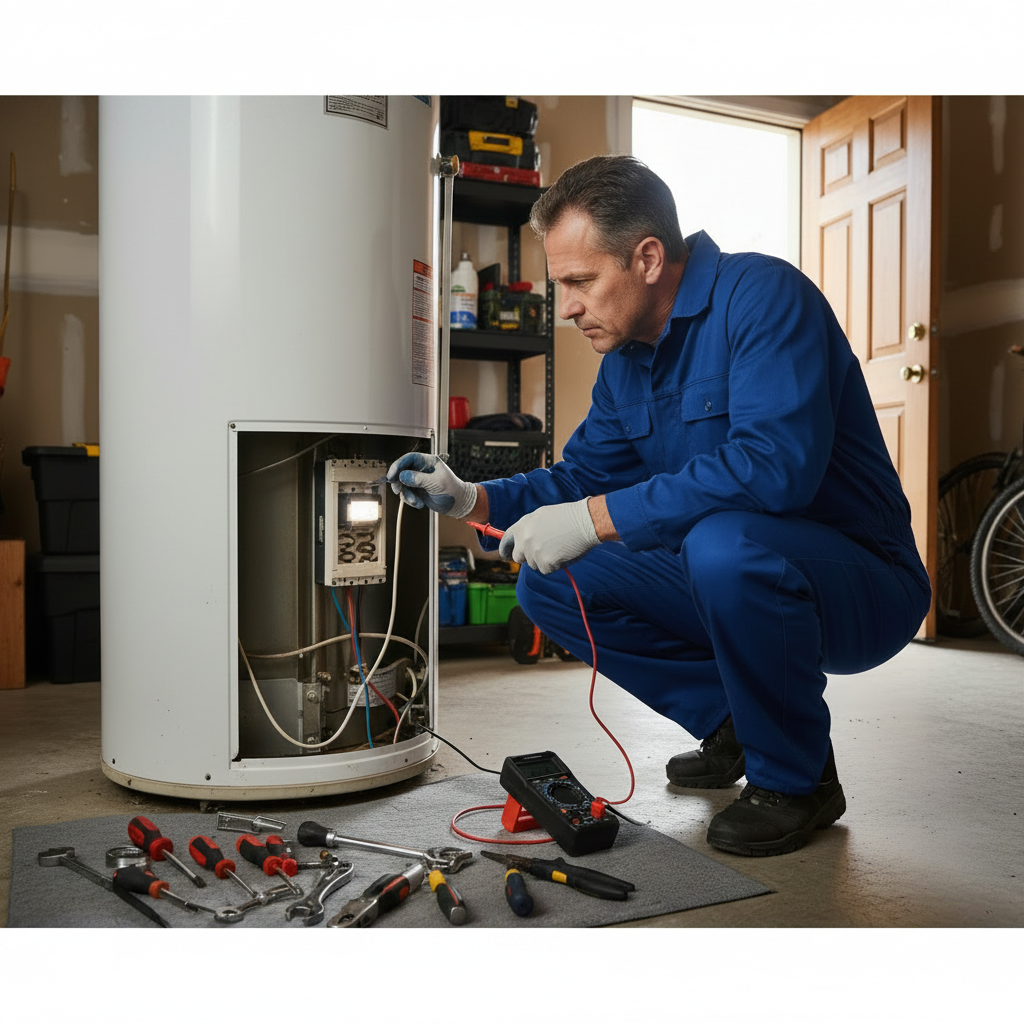
Electric Water Heater Problems in Frisco, TX
What Goes Wrong with Electric Water Heaters — and How We Diagnose Each Failure Point
Electric water heaters break down at entirely different points than gas units — and grasping that distinction is where an accurate diagnosis begins. Electric tanks contain two heating elements (upper and lower), two thermostats, a high-limit switch, and depend on the home's electrical panel for power. When an electric unit stops producing hot water in Frisco, TX, the fault almost always traces back to one of those components.
Because Frisco's newer-construction housing stock means many electric units here haven't been in service long enough for sediment and corrosion to take their toll, most electric unit issues we see here are more likely to be component-specific failures than age-related wear. That often points toward repair rather than replacement — but we don't assume that answer. We test the specific component, evaluate the tank's overall condition, and give you both options with real numbers.
Upper Heating Element — No Hot Water at All
The upper heating element warms the top portion of the tank first. Once that upper section reaches temperature, power shifts to the lower element to heat the rest of the tank. This sequential operation is why upper and lower element failures produce completely different symptoms.
If the upper element fails, you get no hot water at all — because the lower element can't activate until the upper thermostat is satisfied. Complete loss of hot water on an electric unit almost always starts with testing the upper element and the circuit breaker. On a relatively new unit — common in Frisco's newer-construction housing stock — upper element replacement is a straightforward, cost-effective repair. On an older unit with multiple developing problems, it may signal that replacement offers better long-term value.
Lower Heating Element — Hot Water That Runs Out Fast
The lower heating element manages ongoing recovery — keeping the tank hot as hot water gets used. If the lower element fails, you get some hot water initially, but it depletes quickly and the tank recovers slowly. Lukewarm water or rapid depletion are the classic symptoms.
Lower element failure is among the most frequent electric water heater repairs. The part itself is inexpensive, and on a unit that's otherwise in sound condition, replacement restores full performance. The question is whether the unit is otherwise sound — if the tank has significant sediment accumulation or the anode rod is depleted, a lower element repair may be a stopgap rather than a lasting fix. We evaluate the whole unit before recommending the repair.
Thermostats — When Temperature Control Fails
Each heating element has its own thermostat. The upper thermostat governs the upper element and transfers power to the lower thermostat once the top of the tank reaches temperature. The lower thermostat controls the lower element for ongoing recovery. When a thermostat fails, the corresponding element either won't activate at all or behaves erratically.
Thermostat failure can produce confusing symptoms — water that's too hot, not hot enough, or inconsistent. A failing upper thermostat may prevent the lower element from ever activating, mimicking a lower element failure. That's why we test both thermostats alongside the elements instead of guessing based on symptoms alone. Thermostat replacement is a standard repair on units that still have reasonable service life ahead of them.
Circuit Breaker and High-Limit Switch — Safety Systems
The circuit breaker for an electric water heater is a 240V double-pole breaker — it looks like two breakers joined together. A tripped breaker will rest in the middle position between ON and OFF. Resetting it (push fully OFF, then back ON) is the first step when an electric unit produces no hot water. If the breaker trips again right away, there's a fault in the circuit — most likely a shorted heating element — and you should stop resetting it and call a technician.
The high-limit switch (also called the ECO or energy cut-off) is a separate safety device that trips if the water temperature exceeds a safe threshold. If it trips, the tank has overheated — it can be manually reset, but the cause of the overheating needs investigation. A tripped high-limit switch isn't something to reset and ignore; it's a signal that something in the unit's temperature control system isn't working correctly.

Repair vs. Replacement
When Electric Water Heater Repair Makes Sense — and When It Doesn't
The right call depends on which component failed, the unit's age, and its overall condition. We give you both options with real numbers so you can decide — we don't default to replacement, and we don't push a repair that won't hold.
A balanced approach means looking at the whole picture: a single failed lower element on a 5-year-old electric unit with a clean tank is a clear repair. A failing upper element on a 14-year-old unit with heavy sediment accumulation and a depleted anode rod shifts the math considerably. In Frisco's newer-construction housing stock, the first scenario is more common — but the second still comes up on older units in the city, and we walk you through both honestly and show you the cost of each path.
- Lower element failure on a newer unit → repair is almost always the right call
- Upper element failure on an older unit → replacement may be more cost-effective
- Tripping breaker / shorted element → element replacement, not an electrical panel problem
- Multiple component failures → replacement becomes the stronger value
- Heavy sediment or depleted anode rod → affects whether a repair will hold
- We give you both numbers — repair cost and replacement cost — so you can decide
Frisco, TX — Local Context
Electric Water Heater Repair in Frisco, TX — Local Factors and How We Approach It
Frisco is one of the fastest-growing cities in the US, with a population of approximately 245,000 — up roughly 450% since 2000. The median age is 38.3 and the median household income is around $150,000. That explosive growth means a high share of Frisco homes are newer construction, which shapes how electric water heater problems show up here compared to older nearby cities.
In a newer-construction market like Frisco, most electric unit issues we encounter are more likely to be component-specific failures than age and corrosion-related wear — the units simply haven't been in service long enough for sediment and rust to do their damage yet. That often points toward repair rather than replacement, which is good news for Frisco homeowners. But we don't assume that answer. Some Frisco units are old enough to have real corrosion too, and we diagnose the specific component — upper element, lower element, thermostat, or high-limit switch — and evaluate the tank's overall condition before recommending anything.
North Texas Hard Water and Electric Water Heaters
North Texas water is moderately hard, which means dissolved minerals settle to the bottom of the tank and form a sediment layer around the lower heating element. This sediment traps heat against the element's surface, causing it to run hotter than its design rating — which accelerates failure and shortens element life.
The combination of hard water sediment and aging elements creates a compounding problem: the sediment insulates the element, the element overheats, the sheath cracks, and the breaker trips or the element stops producing heat entirely. In Frisco's newer-construction homes, electric units haven't typically accumulated as many years of sediment as in older nearby cities — but the hard water is the same, and the sediment process starts the day the unit is installed.
Annual sediment flushing is the single most effective maintenance step for electric units. It removes the mineral layer before it hardens, keeps the lower element operating at its designed temperature, and extends both element and tank life. But once an element has already failed, flushing alone won't fix it — the element needs replacement, and the tank condition determines whether that repair is worth doing.
Testing Before Recommending — Not Guessing
Electric water heater diagnosis requires a multimeter and a systematic approach. We test both heating elements for continuity and resistance, check both thermostats for proper switching, inspect the high-limit switch, and verify the breaker. We don't replace parts based on guessing — we test each component and show you the result.
This matters because electric water heater symptoms can be misleading. Lukewarm water might mean a failed lower element — or it might mean a failing upper thermostat that's preventing the lower element from activating. A tripping breaker might mean a shorted element — or it might mean the high-limit switch is doing its job because the thermostats have failed. Testing the right components in the right order is the difference between a repair that lasts and one that doesn't.
How We Approach Electric Water Heater Repair in Frisco
When you call, we capture the key details: your unit type, the symptoms, and how long it's been happening. At the visit, we test both heating elements with a multimeter, check the thermostats, inspect the high-limit switch, and verify the breaker.
We tell you what failed, what it costs to fix, and whether the repair makes sense given the unit's age and condition. If the unit is a 5-year-old electric heater with a failed lower element — a common scenario in Frisco's newer housing stock — that's a clear repair. If it's a 14-year-old unit with a failed upper element and heavy sediment, we'll explain why replacement is the smarter call and show you the numbers. The decision is always yours.
Permit Considerations
If an electric water heater repair leads to a full replacement, permit requirements may apply. Permit rules vary by municipality. We recommend contacting the City of Frisco's building department directly to confirm current requirements for your specific project before installation proceeds.
Electric Water Heater Repair Questions in Frisco, TX
After You Reach Out
What Happens When You Call
- 1
You call — we answer 24/7
Describe what you're experiencing — no hot water, tripping breaker, lukewarm water. We capture the details.
- 2
We schedule the visit
Same-day service is available for electric water heater problems in Frisco. A local licensed plumber handles the work.
- 3
We test the specific electric components
Upper and lower elements, thermostats, high-limit switch, breaker — tested with a multimeter in order of likelihood.
- 4
We tell you what failed and what it costs
Specific problem, specific fix, specific cost. Plus whether repair or replacement makes more sense given the unit's age.
- 5
You decide — no pressure
The information is yours. We work at your pace.
Ready to get help?
Call for the fastest response — we're available 24/7. Send a message if it's not urgent — we'll follow up promptly.
Call 24/7 Now — +1 469 824 3854Mon–Fri: 7:00 AM – 7:00 PM · Sat: 8:00 AM – 5:00 PM
Electric Water Heater Problem in Frisco, TX?
Call 24/7 or live chat. We test the specific component — upper element, lower element, thermostat, or high-limit switch — and tell you honestly whether repair or replacement is the right call.
Request Electric Water Heater Repair in Frisco, TX
Describe your situation and we'll follow up promptly during business hours. For urgent issues, call +1 469 824 3854 — it's faster.