Tankless Water Heater Repair · Prosper, TX
Tankless Water Heater Repair in Prosper, TX
Tankless water heater repair in Prosper, TX is something we handle often — and that's not surprising given the community's profile. Prosper has a population of approximately 49,400, a median household income around $195,000 (the highest of the five nearby cities), and is growing at roughly 7.5% annually with a high volume of active new construction. That high-growth, high-income, new-build market means tankless adoption here is likely higher than in the older or more rural nearby cities — so tankless issues like error codes, ignition faults, flow problems, and scale buildup are common and well understood, not rare. We diagnose the exact failure before recommending a fix and tell you honestly whether repair or replacement is the right call. Call 24/7 or live chat now.
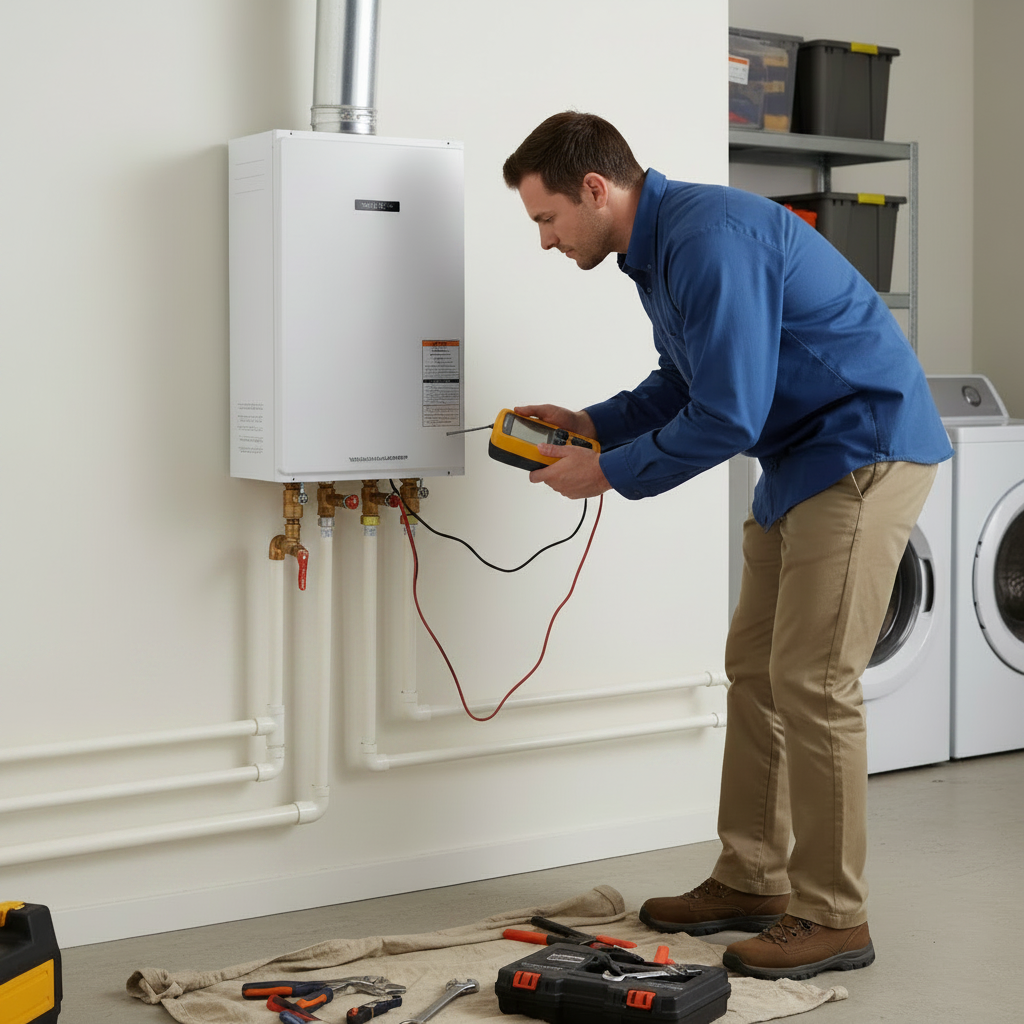

Diagnosis First
We Diagnose Before We Recommend — Repair or Replace
We identify the specific failure before recommending a fix, because the right answer depends on the unit's age, overall condition, and which component actually failed. A newer system with a single failed sensor or igniter is almost always worth repairing. An older unit with a scaled or cracked heat exchanger may not be.
Prosper's high-growth, new-construction, high-income profile means more homes here have tankless systems installed than in some of the older or more rural nearby cities — so tankless repair work is familiar territory for us in this community. When a tankless unit here needs attention, it deserves a focused repair-first evaluation rather than a default replacement pitch.
- Error code diagnosis matched to the specific system at fault
- Gas pressure and supply line evaluation
- Igniter and flame sensor testing
- Heat exchanger scale and condition assessment
- Control board and wiring inspection
Common Tankless Water Heater Problems in Prosper
Tankless systems don't fail the same way tank units do. These are the problems we see most often in Prosper homes with tankless units installed.
Error Codes
When a tankless unit faults, the display typically shows a code that points to ignition, flow, heat exchanger, or sensor trouble. That code is the fastest route to a correct diagnosis.
Ignition Failure
The burner tries to light but can't confirm a flame — no hot water, usually paired with an ignition-related code. Gas pressure, venting, and igniter condition are the usual suspects.
Inconsistent Output Temperature
Hot water that swings between warm and scalding often traces back to a flow sensor, thermistor, or scale problem that prevents the unit from regulating properly.
Low-Flow Activation Problems
Tankless systems need a minimum flow rate to switch on. If yours won't fire during light use, the flow sensor or activation threshold may be out of adjustment.
Scale and Mineral Buildup
Collin County water carries dissolved minerals that settle inside the heat exchanger over time — cutting output and, left untreated, causing internal damage.
Venting Issues
Blocked or improperly routed exhaust can stop the unit from firing safely. This is a combustion safety concern and should be evaluated by a qualified technician.
Error Codes & Ignition
Reading Error Codes and Diagnosing Ignition Failures
When a tankless unit shuts down, it usually leaves an error code on the display. That code points us toward the system at fault — ignition, venting, flow, or temperature. Code systems vary by brand, but the categories are consistent across manufacturers.
Ignition failures top the list. The burner attempts to fire, can't confirm the flame, and the unit locks out. Low gas pressure, a weak igniter, a dirty burner, or a blocked vent can all be responsible. We test each possibility rather than swapping parts on a guess — which is why a methodical diagnosis matters before anything is replaced.
- Error code interpretation matched to specific system faults
- Gas pressure and supply line evaluation
- Igniter and flame sensor testing
- Exhaust and combustion air venting inspection
- Control board and wiring inspection
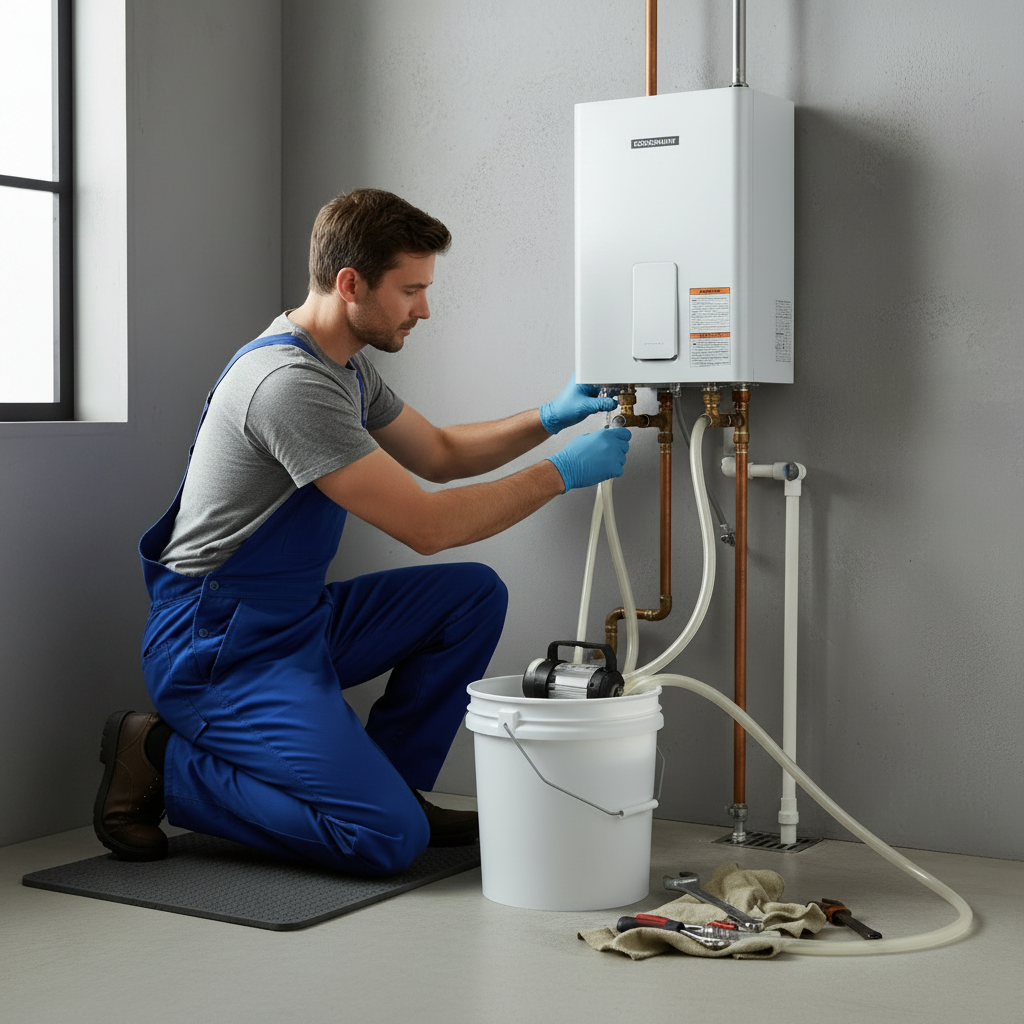
Maintenance
Descaling and Annual Maintenance — Why It Matters in Collin County
Collin County water is hard. Dissolved minerals settle inside the tankless heat exchanger over time — cutting output, reducing efficiency, and eventually causing damage. Scale buildup is the single biggest driver of tankless problems in this region.
Descaling flushes those minerals out. Most manufacturers call for it every one to two years. Skip it and the unit wears out sooner — scale creates hot spots inside the heat exchanger that shorten its service life. In North Texas, descaling is standard maintenance, not an optional upgrade.
- Annual descaling recommended for most Collin County homes
- Citric acid flush dissolves accumulated scale
- Restores output and stabilizes temperature
- Prevents long-term internal heat exchanger damage
- Helps maintain manufacturer warranty validity
Repairing vs. Replacing a Tankless Unit in Prosper
Most decisions come down to age, repair cost, and how the unit is performing. Here's the breakdown.
Repair Makes Sense When…
- The unit is under roughly 8–10 years old
- The failure is a single, isolated component
- The heat exchanger is in solid condition
- No significant scale damage has occurred
- Repair cost is reasonable relative to unit value
Replacement Is Worth Considering When…
- Unit is 10+ years old with recurring issues
- Heat exchanger has failed or is heavily scaled
- Control board has failed on an older unit
- Repair cost approaches replacement value
- Household hot water demand has outgrown the unit
Every unit is different — we give you a specific answer after inspecting yours, not a one-size-fits-all recommendation.
Prosper, TX — Local Context
Tankless Water Heater Repair in Prosper, TX
Prosper is one of the fastest-growing communities in the region — population approximately 49,400, growing at roughly 7.5% annually, with a high volume of active new construction and a median household income around $195,000, the highest of the five nearby cities. That growth, income, and new-build profile means tankless adoption here is likely higher than in the older or more rural nearby cities. Tankless water heater installation in Prosper, TX is a common choice in new-construction, higher-end homes — which means tankless repair, descaling, and diagnosis are familiar work for us in this community, not occasional calls.
For Prosper homeowners with tankless units, that context matters. The units here tend to be newer, often still under manufacturer warranty, and typically haven't accumulated the years of scale that older units in other communities have. But newer doesn't mean trouble-free — early-life component failures, ignition issues, and the same hard-water scaling that affects every tankless in Collin County still happen. We diagnose the specific failure before recommending a path.
How Tankless Water Heaters Work — and Why They Fail Differently
Tankless water heaters — sometimes called on-demand or instantaneous heaters — warm water directly as it passes through the unit instead of holding a reservoir of hot water in a tank. Open a hot tap, and cold water enters the unit, a flow sensor detects the movement, and a gas burner or electric element fires to bring the water to the set temperature before it reaches the faucet.
That operating model is fundamentally different from a tank system, which means the failure modes are different too. A technician whose experience is mostly with tank units will struggle more with a tankless error code than someone who understands flow-based heating. Specialized tankless experience matters — the diagnostic path is not the same.
Common Tankless Problems in Prosper Homes
The problems we see most in Prosper's tankless systems fall into a few clear categories: ignition failures, flow-related activation issues, heat exchanger scale buildup, and sensor or control board faults. Figuring out which category the symptom points to is the first step toward a fast, cost-effective fix.
- Ignition failure: the burner fires but can't confirm flame — codes typically point to gas supply, igniter, or venting
- Flow activation issues: unit won't fire at low flow — often a flow sensor or minimum activation threshold problem
- Temperature inconsistency: output swings between warm and hot — scale buildup or a faulty thermistor
- Heat exchanger scaling: gradual output loss as mineral deposits restrict flow inside the unit
- Venting problems: blocked or improperly routed exhaust prevents safe combustion — a safety concern
- Control board failure: usually seen on older units with multiple codes and erratic behavior
Hard Water and Tankless Systems in Collin County
Water hardness is a genuine concern for tankless systems in Collin County. The water supplied to Prosper and the surrounding cities carries dissolved calcium and magnesium that precipitate out of solution when heated. Inside a tankless heat exchanger — where water is rapidly raised to high temperature — scale forms quickly.
Manufacturers generally recommend annual descaling for homes in hard-water regions. In Collin County, that guidance should not be ignored. A heat exchanger with heavy scale buildup loses efficiency, develops hot spots that shorten its lifespan, and can eventually trigger an over-temperature shutdown that takes the unit offline entirely.
Descaling is a maintenance service, not a repair — it's performed before the unit fails, not after. A citric acid flush circulated through the heat exchanger dissolves the mineral layer and restores flow. It takes about an hour and meaningfully extends the remaining service life of the system.
Reading Tankless Error Codes
One of the most useful features of modern tankless water heaters is the error code display. When the unit shuts itself down, it usually tells you why — in code. The specific codes differ by brand, but the categories are consistent: ignition, flow, exhaust, overheating, and sensor.
An error code is a starting point, not a final answer. It identifies which system to inspect, but it doesn't always pinpoint the exact component that failed. Even so, it narrows the field substantially and typically allows for a faster, more accurate diagnosis than a unit that provides no feedback at all.
Repair vs. Replacement for Tankless Units
Tankless units are a meaningful investment, and that changes the repair calculus compared to tank systems. A targeted repair on a unit that's only a few years old is almost always the right move. The same repair on a 14-year-old system with a failing heat exchanger and a history of recurring faults calls for a more careful evaluation.
The heat exchanger is the most expensive component to replace. If it has failed, the repair cost can approach or exceed the replacement value of the unit on older systems. On newer units still under warranty, the exchanger may be covered. We confirm warranty status before assuming a heat exchanger failure means automatic replacement — that's part of giving you an honest, balanced answer.
When replacement genuinely is the better call, a new tankless water heater installation gives you a fresh warranty, improved efficiency, and a unit properly sized to your household's actual hot water demand. We help you weigh whether staying with tankless or switching back to a tank system makes the most sense for your situation — no pressure either way.
Tankless Water Heater Repair Questions — Prosper, TX
What the Tankless Repair Process Looks Like
You describe what's happening
Error codes, brand, when it started, what you've noticed. Tankless diagnosis begins with the information the unit is already reporting, so every detail helps us arrive prepared.
We diagnose the specific failure
Gas pressure, igniter, flow sensor, thermistor, control board, venting — we test each system the error code or symptoms point to and identify the actual cause before any parts are replaced.
We give you a straight repair-vs-replace answer
If a targeted repair makes sense, we tell you. If the unit has reached the point where repair isn't cost-effective, we say so clearly and explain why — no blanket recommendation.
We fix the problem
The failed component is replaced, the system is tested end to end, and your hot water is restored. If descaling is needed while we're there, we handle that too.
We walk you through what happened
What failed, why it failed, and what to watch for going forward — including when your next descaling service should be scheduled.
Tankless Unit Not Performing in Prosper?
Call 24/7 now or live chat. Repair-first diagnosis — we tell you honestly whether a fix or replacement is the right call after seeing the unit.
Request Tankless Water Heater Repair in Prosper, TX
Describe what's happening — including any error codes visible on the display. We'll respond quickly.