Gas Water Heater Repair · Prosper, TX
Gas Water Heater Repair in Prosper, TX
Gas water heater repair in Prosper, TX means diagnosing components that are entirely different from electric units — the pilot assembly, thermocouple, gas control valve, and burner. Prosper has a population of approximately 49,400, a median household income around $195,000 (the highest of the five nearby cities), and is growing at roughly 7.5% annually with a high volume of active new construction. That new-build profile means most gas unit issues here are more likely to be component-specific or installation-related than age or corrosion-related — a failed thermocouple or a gas valve that's behaving erratically on a relatively young unit, not a rusted-out tank at the end of its life. But this is a diagnostic page first, not a framing exercise. We test the specific component that failed before recommending repair or replacement. Call 24/7 or live chat now.
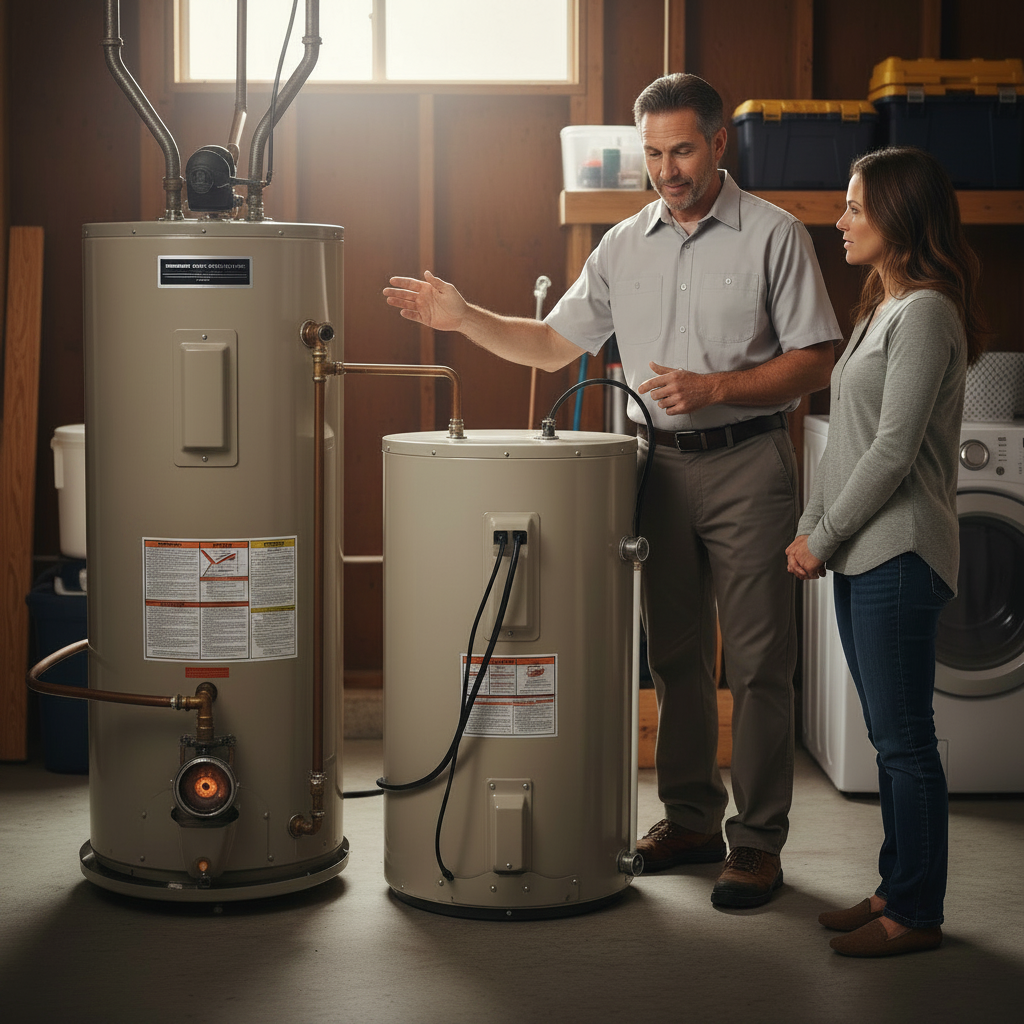
Gas Water Heater Problems in Prosper, TX
What Goes Wrong with Gas Water Heaters — and How We Diagnose Each Failure Point
Gas water heaters break down in specific, recognizable patterns — and the failure points bear no resemblance to electric units. The pilot assembly, thermocouple, gas control valve, and burner are the four components that matter. When a gas heater stops producing hot water in Prosper, TX, the diagnosis nearly always runs through those parts in that sequence.
Because Prosper's housing stock skews newer with a high volume of recent construction, gas unit issues here are more often component-specific or installation-related than age or corrosion-related. A failed thermocouple on a 4-year-old unit is a straightforward repair. A gas valve behaving erratically on a newer install may point to an installation or gas-pressure issue rather than wear. That said, some homes here have older units too — so we diagnose the specific cause before recommending either path, and we show you the numbers so you can decide.
Pilot Assembly — The First Thing We Check
The pilot assembly is where gas water heater diagnosis begins. Many gas units rely on a pilot light that burns continuously, ready to ignite the main burner whenever heat is called for. If the pilot is out, the main burner can't fire and the tank goes cold. Some homeowners can relight the pilot using the instructions printed on the unit.
If the pilot won't stay lit after relighting, the problem isn't the pilot itself — it's almost always the thermocouple. A pilot that repeatedly extinguishes is a symptom, not the root cause. That's why we test the thermocouple next instead of just relighting the pilot and walking away.
Thermocouple — The Most Common Failure
The thermocouple is a small safety sensor that sits in the pilot flame and generates a tiny electrical current to hold the gas valve open. When the thermocouple weakens or fails, the gas valve closes as a safety measure — the pilot goes out and won't relight. This is the most frequent gas water heater repair we perform.
Thermocouple replacement is a defined, low-cost repair with a clear fix. It's not a sign the unit is dying unless the failure keeps recurring. On a gas unit that's otherwise in reasonable condition — which describes most of the newer units in Prosper — a thermocouple replacement can add several years of service. On an older unit near the end of its service life, the same repair may be a stopgap that delays an inevitable replacement. We tell you which situation applies to yours.
Gas Control Valve — When the Valve Itself Fails
The gas control valve regulates gas flow to the pilot and main burner. When it fails, it can stick in a closed position (no gas, no heat) or behave erratically — producing lukewarm water, intermittent operation, or complete shutdown. Gas valve failure is less common than thermocouple failure but more expensive to repair.
On a gas unit under 8 years old with no other issues — the profile of many Prosper units — gas valve replacement is often worth the cost. On a unit approaching 10–12 years with visible corrosion or sediment buildup, the cost of a new valve may approach the value of the unit itself. That's when we present replacement as the more cost-effective option. The decision depends on the unit's overall condition, not just the valve.
Burner Assembly — Combustion and Efficiency
The burner assembly is where gas combustion actually takes place. A burner that's dirty, partially blocked, or improperly adjusted may not ignite correctly even when the pilot is lit and the gas valve is working. Symptoms include slow recovery times, insufficient hot water, or a burner that fires weakly.
On newer installations, a weak or inconsistent burner can sometimes trace to an adjustment or installation issue rather than wear — worth checking before assuming component failure. In other cases, sediment accumulation at the bottom of the tank is the culprit. We assess both the burner and the tank before recommending a path.

Repair vs. Replacement
When Gas Water Heater Repair Makes Sense — and When It Doesn't
Prosper's newer housing stock means there's no universal answer. The right call depends on which component failed, the unit's age, and its overall condition. We give you both options with real numbers so you can decide — we don't default to replacement, and we don't push a repair that won't hold.
A balanced approach means looking at the whole picture: a single failed thermocouple on a newer unit with a clean tank is a clear repair — and that's the more common scenario here given the new-construction profile. A failing gas valve on an older unit with sediment accumulation and visible rust on the tank exterior changes the math considerably. We walk you through both honestly, whichever one applies to your situation.
- Thermocouple failure on a newer unit → repair is almost always the right call
- Gas valve failure on an older unit → replacement may be more cost-effective
- Sediment-related burner issues → flush may help if the tank hasn't corroded
- Multiple component failures → replacement becomes the stronger value
- Visible tank corrosion or rust → replacement, not repair
- We give you both numbers — repair cost and replacement cost — so you can decide
Prosper, TX — Local Context
Gas Water Heater Repair in Prosper, TX — Local Factors and How We Approach It
Prosper is one of the fastest-growing communities in the region — population approximately 49,400, growing at roughly 7.5% annually, with a high volume of active new construction and a median household income around $195,000, the highest of the five nearby cities. That new-build, high-growth profile means gas water heaters here tend to be newer, and most issues we see are more likely to be component-specific or installation-related than age or corrosion-related.
But that context is secondary to diagnosis. A gas unit installed four years ago that develops a thermocouple problem is a different conversation than a twelve-year-old unit with the same symptom — and some homes in Prosper have older units too. We test the specific component — pilot, thermocouple, gas valve, or burner — evaluate the tank's overall condition, and give you an honest recommendation based on what we find.
Collin County Hard Water and Gas Water Heaters
Collin County water is moderately hard, which means dissolved calcium and magnesium minerals settle to the bottom of the tank and form a sediment layer directly above the burner. This sediment acts as an insulator between the heat source and the water, forcing the burner to run longer and hotter to reach the same water temperature.
The result is slower recovery times, higher gas bills, and the rumbling or popping sounds many homeowners recognize. Over time, the sediment layer traps heat against the steel tank floor, accelerating corrosion from the inside out. Even newer units in Prosper aren't immune to this — the hard water doesn't care how old the tank is.
A sediment flush can restore performance if the tank hasn't already corroded. But once the steel floor has thinned, no amount of flushing reverses it. That's why we test the tank condition before recommending a flush — it's not always the right move, and we won't recommend a service that won't actually help.
The Flue and Venting System
Gas water heaters produce combustion gases that must be safely vented outside the home. The flue and venting system is a critical safety component that's often overlooked until something goes wrong. Improper venting can cause carbon monoxide buildup inside the home — a serious and potentially dangerous situation.
On newer installations, venting issues can sometimes trace to an installation problem — improper routing, a loose connection, or a vent configuration that doesn't meet the unit's requirements. During diagnosis, we verify that the flue is properly connected, undamaged, and drawing correctly. If we find venting issues, we address them as part of the repair — a gas valve replacement on a unit with a compromised flue isn't a complete fix. Safety comes first, and that means looking at the whole system, not just the component that failed.
How We Approach Gas Water Heater Repair in Prosper
When you call, we capture the key details: your unit type, the symptoms, and how long it's been happening. At the visit, we test the pilot assembly, thermocouple, gas valve, and burner — in that order, because that's the order of likelihood. We don't guess.
We tell you what failed, what it costs to fix, and whether the repair makes sense given the unit's age and condition. If the unit is a newer gas heater with a failed thermocouple — the more common scenario in Prosper — that's a clear repair. If it's an older unit with a failing gas valve and visible corrosion, we'll explain why replacement is the smarter call and show you the numbers. The decision is always yours.
Permit Considerations
If a gas water heater repair leads to a full replacement, permit requirements may apply. Permit rules vary by municipality. We recommend contacting the Town of Prosper's building department directly to confirm current requirements for your specific project before any replacement installation proceeds.
Gas Water Heater Repair Questions in Prosper, TX
After You Reach Out
What Happens When You Call
- 1
You call — we answer 24/7
Describe what you're seeing with your gas unit — pilot out, rumbling, no hot water. We capture the details.
- 2
We schedule the visit
Same-day service is available for gas water heater problems in Prosper. A local licensed plumber handles the work.
- 3
We test the specific gas components
Pilot assembly, thermocouple, gas valve, burner — tested in order of likelihood.
- 4
We tell you what failed and what it costs
Specific problem, specific fix, specific cost. Plus whether repair or replacement makes more sense given the unit's age.
- 5
You decide — no pressure
The information is yours. We work at your pace.
Ready to get help?
Call for the fastest response — we're available 24/7. Send a message if it's not urgent — we'll follow up promptly.
Call 24/7 Now — +1 469 824 3854Mon–Fri: 7:00 AM – 7:00 PM · Sat: 8:00 AM – 5:00 PM
Gas Water Heater Problem in Prosper, TX?
Call 24/7 or live chat. We diagnose the specific component — pilot, thermocouple, gas valve, or burner — and tell you honestly whether repair or replacement is the right call.
Request Gas Water Heater Repair in Prosper, TX
Describe your situation and we'll follow up promptly during business hours. For urgent issues, call +1 469 824 3854 — it's faster.